
THE MANY FACES OF A SOLO STAR
BY HASAN BEYAZ
PHOTOS COURTESY OF WOOLLIM ENTERTAINMENT
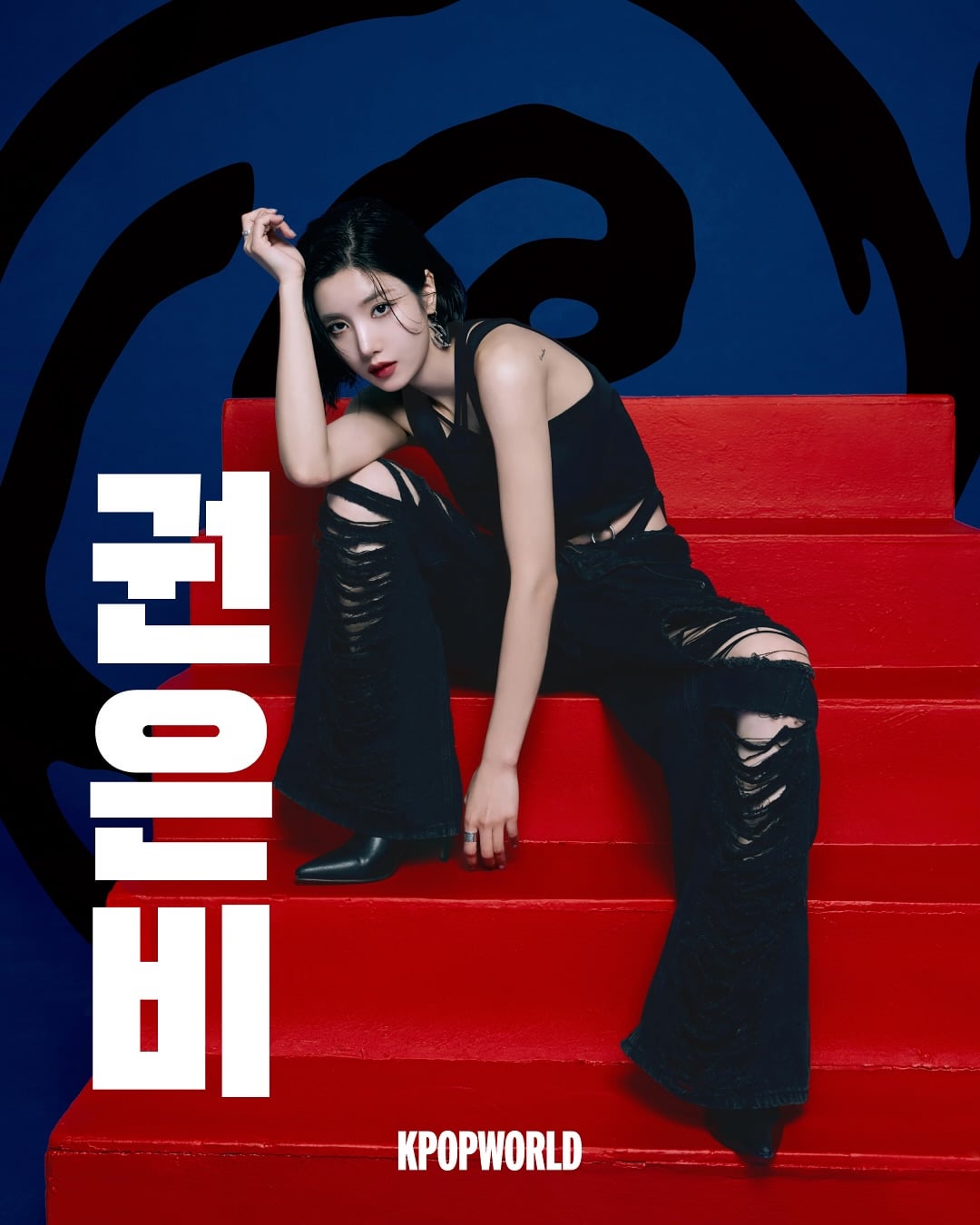
From commanding the high-energy stages of Waterbomb to crafting intimate solo shows like THE RED, KWON EUNBI has spent five years defining herself as a versatile performer and songwriter beyond her IZ*ONE beginnings.
Few artists capture the rush of summer quite like KWON EUNBI.
Since stepping out on her own after IZ*ONE, she’s carved a reputation as one of K-pop’s most dynamic solo performers – equal parts powerhouse vocalist, songwriter, and stage architect. The Waterbomb stage – one of Asia’s biggest summer music festivals, known for its high-energy performances and fan-favourite summer hits – has become her domain, a place where fans expect fireworks and she somehow still finds ways to surprise them. This year’s “Crazy in Love” set might have been her sharpest yet – a performance that didn’t just crown her Queen of Waterbomb, but showed how she wears the title lightly. Fans might be surprised to hear that KWON EUNBI still gets nervous, still wonders afterwards if she gave the audience what they came for – yet the way she talks about preparation is less about pressure and more about discovery. Careful planning, but also a promise she made to herself: enjoy it this time. That mix of discipline and play is what keeps her stages from feeling like a repeat of last year’s glory.
Her recorded work shows the same push and pull. Since her 2021 solo debut with “Door,” KWON EUNBI has built a discography that swings between elegance and edge, often with her own writing and composing credits at the core. A song like January’s “Snowfall” glides in with seasonal delicacy, while the bounciness of April’s “Hello Stranger” hits harder, built on bolder intent. Two very different singles, but both cut from the same instinct: to try out something new without waiting for a bigger project to frame it. KWON EUNBI says she loves the immediacy of singles, the way they can lock in a moment and let her take risks. Writing remains the toughest part, especially lyrics, but that challenge is also the hook. Turning private emotions into words that anyone can hold onto is what makes her feel most attached to the songs once they’re out in the world.
The contrast between her festival stages and her own concerts makes that versatility even clearer
Waterbomb, she says, is like throwing yourself into a collective high, a blur of energy where the crowd carries you as much as you carry them. THE RED, her 2025 solo concert series, stretched across two nights in Seoul before heading to Taipei and Macau. The experience is about immersion – slowing the world down so fans can step directly into hers. She thinks carefully about setlists and even how she speaks on stage to make sure each city feels included. What comes through, though, is that the emotions underneath don’t really change. Whether she’s drenched on a festival stage or singing face to face, connection is what fuels her.
That sense of connection has also shifted how she sees herself. Fans often imagine her as endlessly bright, but KWON EUNBI is quick to note that deeper, sometimes darker emotions sit under the surface. That honesty has defined her solo years, alongside the harder lessons she’s picked up since IZ*ONE, the 12-member girl group that launched her career and built her early fanbase – like learning to trust her own instincts. Now, heading into her thirties, she sounds less concerned with proving herself and more focused on strength, confidence, and happiness on her own terms.
Her 2022 hit “Glitch” still feels like the song that best mirrors who she is: a reminder that imperfection doesn’t diminish you, it makes you whole. And with five years since “Door” on the horizon, KWON EUNBI says one thing hasn’t changed at all – the spark that hits when she locks eyes with fans mid-song, the moment she remembers exactly why she’s still here.
In the middle of preparing to greet fans through her concert series THE RED, KWON EUNBI made time to talk with KPOPWORLD about the depths within her artistry, the mindset she’s carrying into her thirties – and, yes, those Waterbomb stages too.
This year’s “Crazy in Love” stage at Waterbomb felt like your most iconic one yet, and it really cemented your title as the Queen of Waterbomb. How do you approach building a performance at that scale – not just living up to expectations, but surpassing them year after year?
The Waterbomb stage always feels like one that all fans really look forward to. Every time I finish a performance, I can’t help but think, “Did I show them a good stage? Did I make any mistakes because of nerves?”
For the “Crazy in Love” stage this time, I wanted to capture a variety of colors both musically and performance-wise, so I prepared everything carefully – from the choreography to the recording. While preparing the performance, I also had a goal in mind: “This time, let’s make it a stage I truly enjoy.” I think the secret to going beyond expectations is having the spirit to take on new challenges.
Waterbomb is such a unique performance space, with its own culture and energy. How does the atmosphere of Waterbomb across diff erent cities compare to performing your own solo concerts?
Waterbomb has a diff erent vibe and audience reaction in every city, so even with the same set, each stage feels completely new.
On the other hand, my solo concerts are a time where I invite fans into my own world, so there’s a deeper sense of immersion.
If Waterbomb feels like jumping and playing together in the middle of a festival, a concert feels more like sharing emotions face-to-face with the fans. Both Waterbomb and my concerts give me so much positive energy.
You’ve released two very diff erent digital singles this year – Snowfall and Hello Stranger. What do these songs reveal about the range of your artistry and the directions you’re excited to explore?
“Snowfall” is a song I prepared because I really love winter, and I wanted to share my voice with many people during that season. I wanted to capture the emotions that suit the winter season.
On the other hand, “Hello Stranger” carries a more daring message, and through it, I wanted to show a diff erent side of myself.
Both songs were processes of bringing out contrasting sides within me. Moving forward, I hope to keep trying new genres and forms of expression to showcase the broad spectrum of who I am as an artist.
Digital singles like Snowfall and Hello Stranger are standalone moments to show diff erent colours of yourself outside a larger project. Do you approach these standalone releases diff erently in terms of how experimental you allow yourself to be?
With a full album, the overall concept and storyline are important, whereas with a single, the charm lies in being able to immediately capture the emotions of the current moment.
That’s why I can be a little bolder in trying out new sounds or visuals when working on singles. I feel happiest when fans react by saying, “Oh, so this side of you exists, too?!”
You’ve steadily built up writing and composing credits across your solo releases. What part of the creative process feels most natural to you now, and what part still challenges you?
The part that still feels the most challenging is finishing the lyrics. I want to tell my own story while also making sure that many people can relate to it, so I’m always thinking it through.
Because it’s such a challenging process, I feel even more attached to it, and that makes it all the more rewarding once it’s complete.
Your 2025 solo concert THE RED has already taken place with two nights in Seoul, and now you’re taking it abroad to Taipei and Macau. What feels most different about building a full solo concert experience for international audiences, compared to festival stages?
Even though languages and cultures may be different, whenever we connect through my music, I always feel a sense of overwhelm, happiness, and amazement.
That’s why I try to be extra thoughtful in putting together each performance. I think carefully about the setlist and the comments I share so they resonate with the culture of each country, allowing me to connect more closely with local fans.
The most special part is that, despite our differences, music has the power to bring us all together as one.
As your solo career has grown, what’s the biggest misconception you think people still have about you as an artist?
Since many people often see me as bright and full of energy, I think they tend to assume that I’m always that way.
But inside, I also have deep emotions, and at times, there are darker and more serious sides of me as well.
That doesn’t mean I see it as a misunderstanding, though!
Rather than how I’m perceived, what matters more is that all of those different sides come together to make up who I truly am.
What has been the hardest lesson you’ve had to learn in carving your own path after IZONE, and how has it shaped the artist you are today?
After IZONE, I feel like I learned how to do everything on my own. Through that process, the biggest growth for me was learning how to trust my own voice.
You’re about to enter a new decade in your life, and turning 30 often brings a new sense of clarity. Has this milestone made you rethink your goals as an artist or the way you approach music?
Before turning thirty, I honestly felt a little afraid. But these days, I actually feel like I’m becoming mentally stronger, and I’m gaining more confidence. Lately, I find myself thinking less about how others see me and focusing more on my own happiness first.
Is there a particular moment in your twenties you now look back on differently with the perspective you have today?
When I first debuted, I felt a lot of pressure that I had to succeed no matter what. Looking back now, I realize that all the worries and anxieties I had back then were also part of my growth. That’s why these days, I don’t fear failure anymore, and I think I’m able to enjoy the stage much more than I did back then.
Looking back across your discography, is there a particular lyric or song you wrote that feels closest to your identity as an artist?
I think “Glitch” is the song that represents my identity the best. Its message—that even imperfections and small flaws can ultimately lead you to love yourself—really reflects my own story.
Next year marks five years since your solo debut with DOOR. When you think about the artist you were then versus now, what’s changed the most – and what still feels the same?
When I released “Door”, everything felt new and exciting, but at the same time, it was also a little scary. Now, being on stage feels much more enjoyable and comfortable, probably thanks to all the experiences I’ve had.
But one thing that hasn’t changed is the happiness I feel whenever I make eye contact with my fans during a performance.
🔗 kpopworld.com/en/news/kwon-e…
🔗 instagram.com/p/DRL0itwiVGn